Is adhesive tape just tape?
- Tapells
- 25 Aug ,2026
Calling every rolled material “tape” sounds convenient, but it can create serious confusion when buyers need specific bonding, sealing, insulation, or industrial performance.
Adhesive tape is tape, but not every tape is adhesive tape. Adhesive tape has an adhesive layer that lets it bond to a surface, usually through pressure. The word “tape” can also describe non-adhesive products used for wrapping, marking, sealing, measuring, or other purposes without a pressure-sensitive adhesive layer.
This difference becomes more important in industrial sourcing. A tape’s name gives only a general idea of the product. Its backing, adhesive, thickness, strength, temperature resistance, and application conditions tell buyers what the tape can actually do.
What distinguishes adhesive tape from non-adhesive tape?
Two products can both arrive in rolls and both be called tape. Still, their working principles may be completely different, which can make a general product name misleading.
Adhesive tape has an adhesive coating that creates a bond between the tape and a surface. Non-adhesive tape does not depend on this adhesive layer. It may work through wrapping, tension, mechanical contact, or another method. The presence and function of the adhesive layer are the main differences between these product groups.
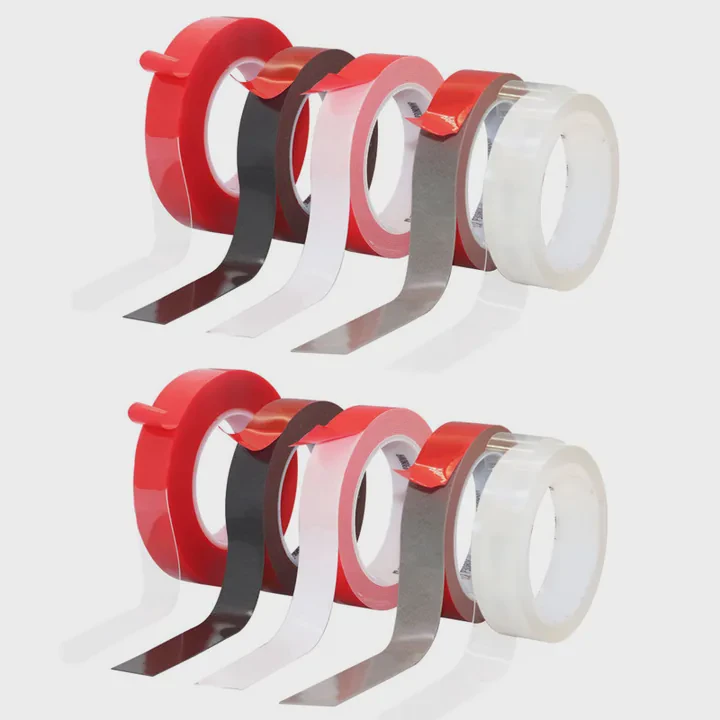
The adhesive layer creates the main difference
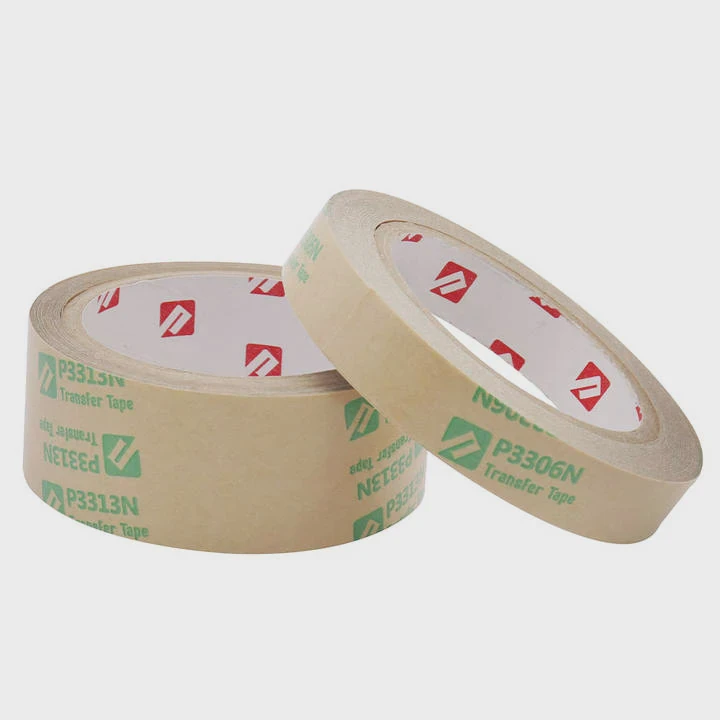
Most common adhesive tapes have a backing or carrier combined with an adhesive coating. The user places the tape on a suitable surface and applies pressure. The adhesive makes contact with the surface and creates a bond.
This simple structure appears in many familiar products.
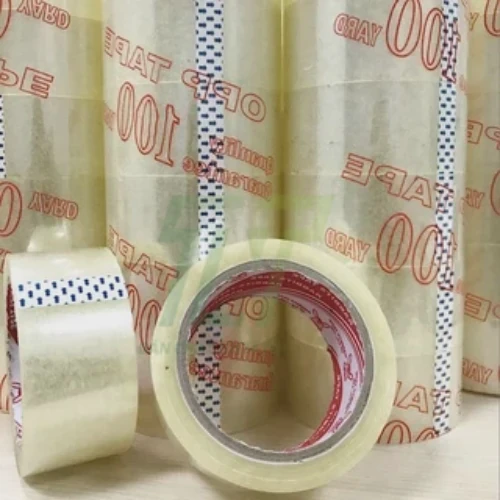
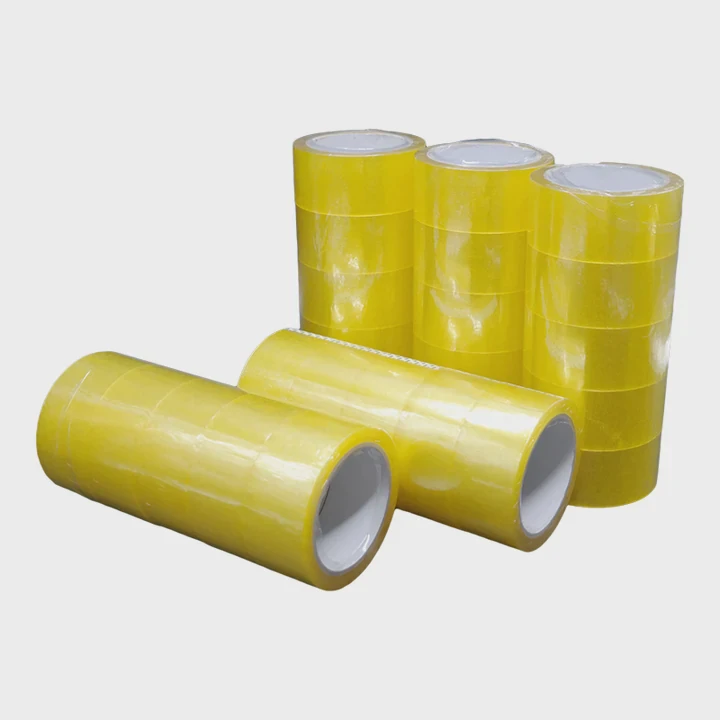
BOPP packing tape has a plastic film backing and an adhesive coating. Masking tape normally uses paper with pressure-sensitive adhesive. Electrical tape can use a flexible PVC backing with adhesive. Duct tape commonly combines a reinforced backing with an adhesive layer.
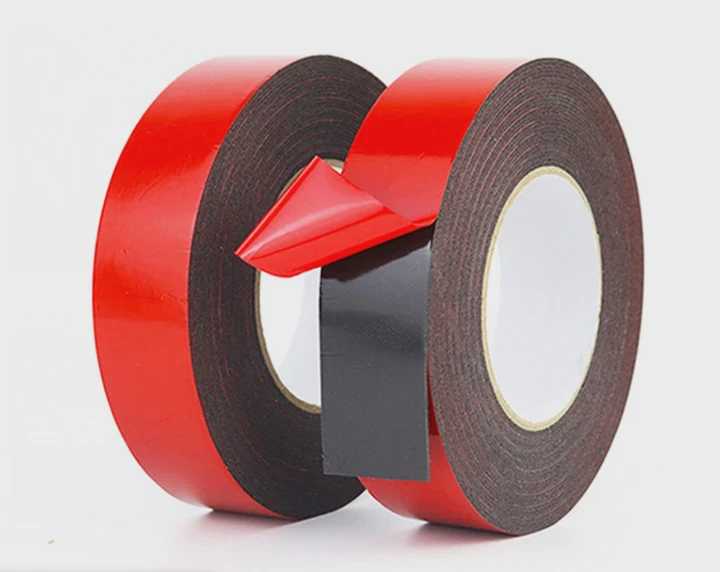
Double-sided tape works slightly differently because it has adhesive on both sides. It can bond two surfaces while remaining between them.
These products look different and perform different jobs, but they all belong to the adhesive tape family because adhesion is a key part of how they work.
Non-adhesive tape works differently
Some products use the word “tape” even though they do not rely on a pressure-sensitive adhesive coating.
Thread seal tape is a good example. The material is wrapped around threaded pipe connections. Its function comes mainly from the material and the way it fills spaces between threads rather than from an adhesive bond.
Barrier tape can also be non-adhesive. It may be tied or fixed between posts to identify a restricted area. It performs a marking function without needing to stick along its entire length.
Measuring tape is another obvious example. It is called tape because of its long, narrow form, not because it contains adhesive.
This means that the word “tape” describes a much wider group than “adhesive tape.”
Adhesive tape is also different from liquid glue
Adhesive tape and liquid adhesive can both join materials, but they are applied differently.
Tape already contains a controlled adhesive layer. In many pressure-sensitive products, users can apply it directly without mixing or spreading a separate glue.
Liquid adhesives may need dispensing, curing, drying, or mixing. They can be useful for many bonding applications, but the production process can be different.
| Product type | Adhesive layer | How it works | Common example |
|---|---|---|---|
| Adhesive tape | Yes | Bonds after contact and pressure | Packing tape |
| Double-sided tape | Both sides | Bonds two surfaces | Mounting tape |
| Masking tape | Yes | Temporary pressure-sensitive bond | Painting tape |
| Thread seal tape | Usually no PSA layer | Wraps around threads | Plumbing work |
| Barrier tape | Often no adhesive | Marks or blocks an area | Safety marking |
| Measuring tape | No | Measures distance | Hand tool |
| Liquid adhesive | Not a tape | Applied directly as glue | Assembly bonding |
For industrial purchasing, this distinction prevents a basic sourcing mistake. A buyer should not select a product simply because its supplier calls it tape.
I usually start by looking at what the product needs to accomplish. Does it need to stick to cardboard? Does it need to hold two components together? Does it need to insulate a wire? Does it need to protect a painted surface temporarily?
Once the function is clear, the correct tape category becomes much easier to identify.
How is adhesive tape constructed for industrial use?
Industrial tape can look like a simple roll from the outside, but its performance depends on several layers and production choices. Small construction changes can produce very different results.
Industrial adhesive tape is commonly constructed from a backing or carrier combined with a pressure-sensitive adhesive. Some products also use primers, release coatings, reinforcement layers, or release liners. Manufacturers select these components according to required strength, flexibility, bonding performance, temperature resistance, durability, thickness, and application method.
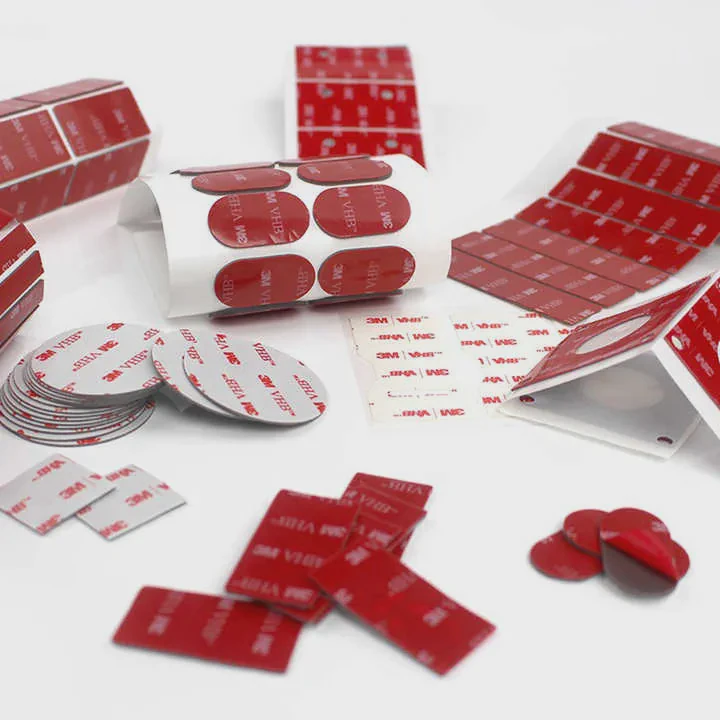
The backing provides the main structure
The backing is the material that supports the adhesive and gives the tape much of its physical character.
BOPP film is commonly used for carton sealing tape. It can provide useful tensile strength while remaining suitable for efficient high-volume production.
Paper is widely used for masking tape. Crepe paper can provide flexibility and easy hand tearing. These properties make it practical for painting, temporary protection, labeling, and many masking operations.
PVC is commonly associated with electrical tape. Its flexibility can help the tape follow wires and irregular shapes.
Cloth-backed tape provides another type of construction. The reinforcement can offer greater mechanical strength than basic paper tape, making it useful for repair, bundling, and selected industrial tasks.
Foam can be used as a carrier for mounting and sealing products. The foam can help fill small gaps between surfaces and provide cushioning.
Aluminum foil tape uses metal foil as the backing. This construction makes it useful for selected HVAC, insulation, and sealing applications.
The adhesive creates the bond
The next major part is the adhesive system.
Pressure-sensitive adhesive is common because it allows tape to bond after contact and pressure. Users do not normally need to add water or separate liquid glue before application.
However, pressure-sensitive adhesives are not all the same.
Rubber-based adhesive systems can provide strong initial tack in many applications. Acrylic adhesive systems can offer useful aging and environmental performance. Specialized products may use other adhesive technologies when the working conditions require them.
The adhesive coat weight can also influence performance. More adhesive does not automatically mean a better tape. The complete design must match the backing, surface, and application.
Some tapes contain additional layers
Industrial adhesive tape can include more than a backing and adhesive.
A primer may help the adhesive stay securely connected to the backing. A release coating can help a single-sided tape unwind correctly from the roll.
Double-sided tapes often use a release liner. The liner protects an exposed adhesive surface until the buyer is ready to use the product.
Some tapes also include reinforcement materials. These can improve tensile strength or help the tape handle demanding applications.
Production control matters
Construction is only useful when it remains consistent.
Industrial customers usually expect one production batch to perform like the previous batch. Large differences in thickness, coating, roll length, adhesion, or unwinding can create problems on production lines.
This is why raw material selection, coating control, slitting, rewinding, inspection, and packaging all matter.
When working with a custom tape requirement, I consider the finished product as a complete system. Changing the backing thickness can affect handling. Changing the adhesive can affect bonding and removal. Changing the total thickness can affect automated equipment.
A good industrial tape is therefore not simply a strip of material with glue on it. Its construction needs to be designed and controlled around a defined application.
Why are backing and adhesive materials important?
A tape may have excellent adhesive but still fail because its backing is wrong for the application. The reverse is also true, so both materials need to work together.
Backing and adhesive materials are important because they control different parts of tape performance. The backing affects strength, flexibility, thickness, tear behavior, and environmental resistance. The adhesive controls tack, peel performance, holding power, aging, and surface compatibility. A successful tape combines both materials for its intended application.
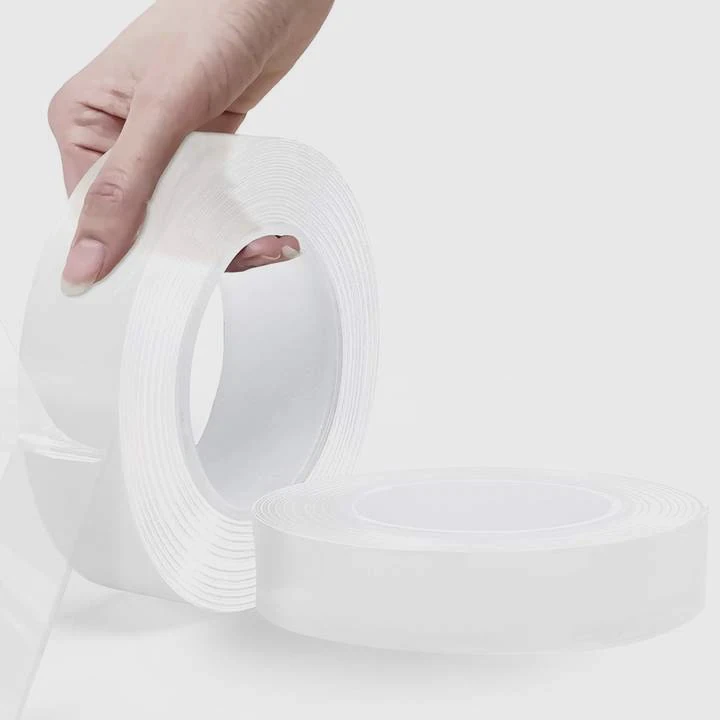
Backing controls physical behavior
The backing is one of the first things I consider when comparing adhesive tapes.
A film tape and a paper tape can have similar adhesive strength but behave very differently during use.
BOPP film provides a useful combination of strength and relatively low thickness. This makes it widely used in packaging applications.
Paper behaves differently. It can often be torn by hand and can follow shapes well, which helps explain its use in masking products.
PVC provides flexibility that is useful in electrical and other wrapping applications.
Cloth can provide stronger reinforcement for applications where basic film or paper may not offer the required mechanical properties.
Foam has another role. Instead of simply providing tensile strength, it can conform to gaps and irregular surfaces. This makes foam tape useful for mounting, cushioning, and sealing.
| Backing material | Main characteristic | Common tape application |
|---|---|---|
| BOPP film | Strength and efficient processing | Packing tape |
| Crepe paper | Flexible and hand tearable | Masking tape |
| PVC | Flexible and conformable | Electrical tape |
| PET film | Thin and dimensionally stable | Industrial double-sided tape |
| Cloth | Reinforced construction | Duct and repair tape |
| Foam | Gap filling and cushioning | Mounting tape |
| Aluminum foil | Metal backing properties | HVAC and sealing tape |
| Kraft paper | Paper-based construction | Packaging tape |
Adhesive controls surface bonding
The backing gets the tape to the surface, but the adhesive determines how the tape interacts with that surface.
Initial tack is one factor. A tape with strong initial tack can grab the surface quickly.
Peel performance is another factor. It helps describe the force related to removing tape from a surface under defined conditions.
Holding power also matters. A tape may feel sticky when first applied but still move or fail under load over time.
Aging resistance becomes important for longer applications. Some tapes are used for only a few hours, while others may need to remain bonded for years.
The surface changes adhesive performance
There is no adhesive that behaves exactly the same on every material.
Clean glass and rough cardboard create different bonding conditions. Painted metal, wood, foam, and plastics can also produce very different results.
Surface contamination makes the situation more complex. Dust, oil, moisture, and other materials can prevent proper adhesive contact.
Temperature matters too. An adhesive can become softer or harder as conditions change. Outdoor applications can also add sunlight, water, and changing temperatures.
This is why the statement “strong adhesive” gives a buyer very little useful information.
A better question is: strong on which surface, under what temperature, for how long, and under what load?
Backing and adhesive must be matched
A successful product needs the right combination.
A strong adhesive on a weak paper backing will not turn the product into a heavy-duty repair tape. A very strong film with an unsuitable adhesive will not create reliable bonding on a difficult surface.
For B2B sourcing, I prefer to define both sides of the product specification. The backing type, backing thickness, adhesive system, total thickness, width, length, and required performance should be considered together.
Sample testing can then confirm whether that combination works under the buyer’s real conditions.
Which industries rely most on adhesive tape?
Adhesive tape is easy to overlook because it is often a small part of a finished product. Yet a tape failure can stop packaging, damage components, or slow an entire production process.
Industries that rely heavily on adhesive tape include packaging, logistics, electronics, electrical manufacturing, automotive production, construction, HVAC, painting, furniture, appliance manufacturing, and general industrial assembly. These industries use tape for sealing, bonding, masking, insulation, protection, mounting, bundling, marking, cushioning, and temporary processing.

Packaging and logistics use huge volumes of tape
Packaging is one of the most familiar adhesive tape markets.
Carton sealing tape keeps boxes closed during storage and transportation. BOPP packing tape is widely used for this purpose because it can combine practical strength with efficient high-volume use.
A packaging buyer still needs to consider the carton and shipping environment.
Heavy cartons create different demands from lightweight boxes. Recycled cardboard can have different surface properties. Cold warehouses, warm shipping containers, and long storage periods can also affect performance.
Logistics facilities use warning and marking tapes as well. These products can identify pathways, work zones, storage areas, and hazards.
Electronics needs controlled and precise bonding
Electronics manufacturers can use adhesive tape for mounting, insulation, cushioning, temporary protection, and component assembly.
Double-sided tape is especially useful when manufacturers want to bond components without visible mechanical fasteners.
Electronic products can require thin materials and tight thickness control. Small differences can matter when the tape becomes part of a compact device.
Some production processes also require clean removal after temporary use. Others need a long-lasting bond.
The specification should reflect the actual role of the tape.
Automotive manufacturing uses many tape families
A modern vehicle can use adhesive tape in many places.
Wire harness tape helps organize and protect cable systems. Double-sided tape can mount trims, badges, and selected interior parts. Foam tape can provide sealing, cushioning, or mounting. Masking tape protects areas during painting and finishing.
Automotive environments can include vibration, moisture, temperature changes, and long service periods. These conditions can make tape selection more demanding than normal household use.
Electrical work requires specialized tape
Electrical tape is used for insulation, wire wrapping, identification, and protection.
The tape needs to meet the requirements of the actual electrical application. A product that simply sticks to a cable is not automatically suitable for electrical insulation.
Backing flexibility, adhesive performance, temperature conditions, and relevant electrical properties can all matter.
Construction and HVAC need different tape designs
Construction creates a wide range of surfaces and working conditions.
Masking tape can protect surfaces during painting. Duct tape can support repair and bundling. Double-sided foam tape can be used for selected mounting tasks. Anti-slip tape can add grip to walking surfaces.
HVAC applications often use aluminum foil tape for sealing and insulation-related work.
The surface can be one of the biggest challenges. Clean metal, painted walls, wood, glass, and dusty construction materials do not provide the same bonding conditions.
Manufacturing depends on consistency
General manufacturing brings all these requirements together.
Factories can use tape during assembly, painting, protection, transportation, identification, and final packaging. Some tapes remain in the finished product. Others are removed during production.
This makes consistent production important for industrial buyers.
When I evaluate a tape for an industrial project, the application comes first. The surface, operating temperature, required holding time, load, removal conditions, and environmental exposure create the basic performance target.
After that, the backing, adhesive, thickness, dimensions, color, printing, and packaging can be defined.
This method also helps with OEM and ODM orders. A standard tape may already meet the requirement. If it does not, the construction or specifications can be adjusted around the application.
The term “adhesive tape” therefore covers a very large industrial product family. Each industry may use different tape designs, but they all depend on the same basic idea: a controlled adhesive layer combined with a suitable backing to perform a specific job.
Conclusion
Adhesive tape is tape, but tape is a much broader term. Adhesive tape uses an adhesive layer for bonding, while other tapes may work without adhesive. For industrial use, backing, adhesive, construction, surface conditions, and application requirements determine which tape is the right choice.